
About us
About Dynamic Drain Technologies
Infrastructure diagnostics and CIPP rehabilitation inside occupied buildings, since 2008.
By the numbers
- 40–75%less than conventional replacement
- 50 yrliner life, backed by a 10-year warranty
- 2–84 inpipe diameters
- 2008founded
Selected clients


Who we are
Company Overview
- 2008Founded
- 286Published projects
Founded in 2008 in Virginia Beach, Dynamic Drain Technologies rehabilitates the pipe infrastructure inside occupied buildings, across a service corridor that runs from Maine to Florida. Our clients are federal, industrial, commercial, and institutional facilities, including universities and large multifamily and condominium buildings.
Our approach starts with Infrastructure Intelligence, the evaluation program that maps, inspects, and grades a system before any work begins, and follows with trenchless CIPP rehabilitation in place of full pipe replacement. Inside occupied buildings, we coordinate directly with property management to schedule the work and notify residents, keeping disruption to a minimum, something residents have praised in their reviews.
Our work was the subject of a Cleaner Magazine cover story in March 2013, and Trenchless Technology covered our conduit rehabilitation beneath the U.S. Capitol Visitor Center in April 2011.
Explore Infrastructure Intelligence
As featured in
- Cleaner MagazineCover story
- Trenchless TechnologyConduit rehabilitation beneath the U.S. Capitol Visitor Center
The team
Our Leadership



How we work
Our Technologies

CCTV Inspection and PACP Assessment
Inspection cameras travel through every line, recording cracks, root intrusion, grease, corrosion and failing joints. Each defect is coded to the NASSCO PACP standard, so every section carries a consistent condition grade.
- Inspect
- CCTV camera
- Code
- PACP standard
- Grade
- 1 to 5 scale
- Plan
- Prioritized
 02
LiDAR and Matterport Scanning, GIS Mapping
Buildings and sites are scanned and every line is mapped, so condition data sits on an accurate plan of the property.
 03
CIPP Lining
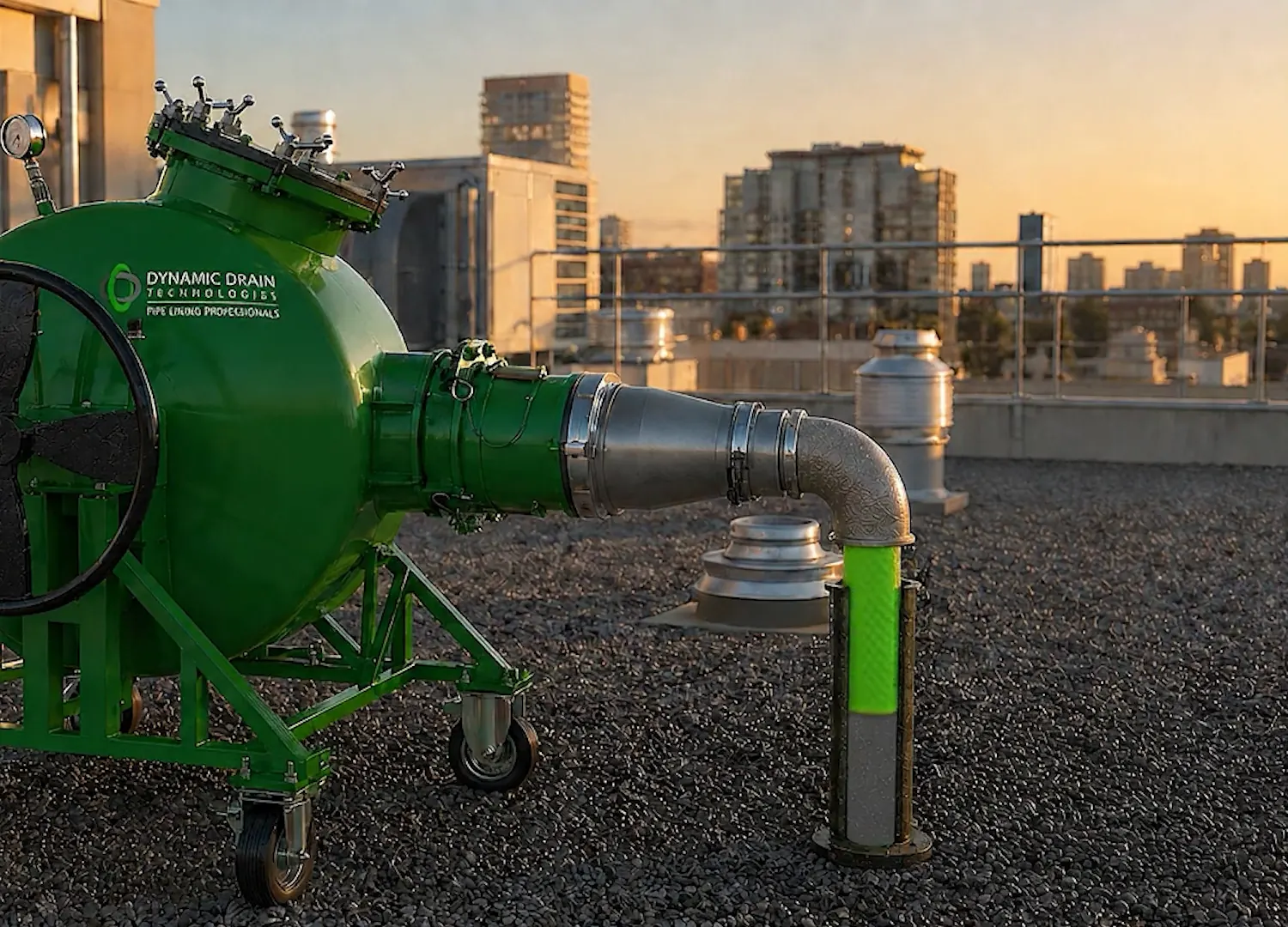
Resin-saturated liners are installed and cured inside the existing pipe, creating a new pipe within the old one, without full replacement.
 04
BIM, Revit and Inventor Riser Modeling
Riser stacks are modeled in Revit and Inventor, so complex systems can be reviewed and phased before work begins.
Newsroom
Latest News



What happens next
Start your project
Tell us more about your infrastructure challenges.
- 01Evaluation studyThe system is mapped, inspected by camera, and every section is condition-graded.
- 02Prioritized findingsGrades are weighted by system risk and turned into a plan, most critical sections first.
- 03RehabilitationTrenchless CIPP lining of the sections that matter most, without full pipe replacement. Access requirements are confirmed during the evaluation.